
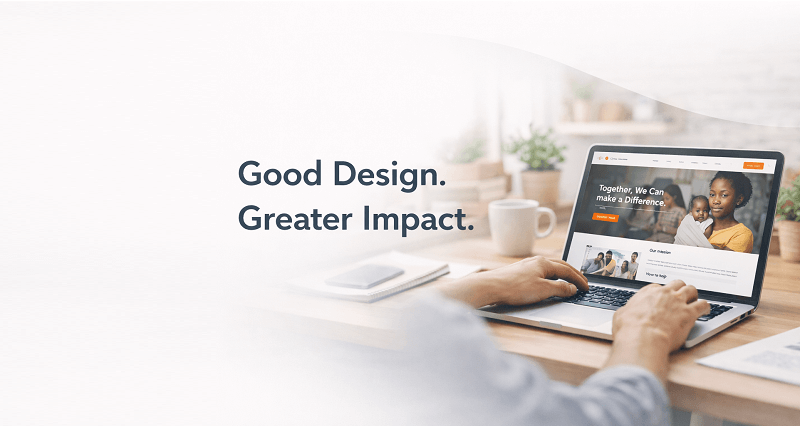
In today’s digital-first world, an NGO’s website is far more than an online brochure—it is the heart of its public presence. For many donors, volunteers, partners, and beneficiaries, your website is the first and sometimes only interaction they will ever have with your organization. A well-designed website can inspire trust, drive action, and amplify impact. A poorly designed one can silently undermine even the most meaningful mission.
Below is an in-depth look at why good website design is critical for NGO impact, and how it directly supports visibility, credibility, and real-world change.

Your Website Is Your Most Powerful First Impression
People form opinions about a website in less than a second. For NGOs, this snap judgment often determines whether a visitor:
-
Trusts your organization
-
Reads your story
-
Donates, volunteers, or leaves immediately
Good design communicates professionalism, transparency, and purpose. Clean layouts, consistent branding, readable typography, and thoughtful visuals signal that your organization is serious, credible, and worth supporting.
Why it matters:
Donors are cautious. Volunteers are selective. A polished website reassures visitors that their time, money, and trust are in good hands.
Let’s solve your ngo problem together

Clear Design Helps People Understand Your Mission Quickly
NGOs often work on complex social, environmental, or humanitarian issues. Without clear design, even the most powerful mission can feel confusing or overwhelming.
Good website design:
-
Uses strong visual hierarchy to guide attention
-
Breaks information into scannable sections
-
Highlights your mission, impact, and goals upfront
Visitors should understand what you do, who you serve, and why it matters within seconds.
Why it matters:
If people don’t immediately “get” your mission, they won’t stay long enough to care.

Design Directly Affects Donations and Conversions
A beautiful website is not just about aesthetics—it’s about action. Strategic design encourages visitors to:
-
Donate
-
Sign up for newsletters
-
Volunteer
-
Attend events
-
Share your cause
Effective NGO websites use:
-
Clear calls-to-action (CTAs)
-
Simple, distraction-free donation flows
-
Trust signals (testimonials, partner logos, impact metrics)
Why it matters:
Even motivated supporters may abandon a donation if the process is confusing, slow, or visually overwhelming. Good design removes friction and increases conversion rates.


Mobile-Friendly Design Expands Your Reach
A large percentage of users—especially in developing regions—access websites primarily via smartphones. If your site isn’t mobile-friendly, you are unintentionally excluding a huge audience.
Responsive design ensures that:
-
Content adapts to all screen sizes
-
Buttons are easy to tap
-
Text is readable without zooming
Why it matters:
For NGOs working globally or in grassroots contexts, mobile accessibility is not optional—it’s essential for inclusion and equity.

Design Builds Trust Through Transparency
Trust is the currency of the nonprofit sector. Donors and partners want proof that your organization is legitimate and effective.
Good website design supports transparency by clearly presenting:
-
Financial reports and accountability information
-
Impact stories and measurable outcomes
-
Leadership and team details
-
Contact information and social proof
Why it matters:
When people can easily see how funds are used and what impact is achieved, they are far more likely to give—and to give again.

Strong Design Amplifies Storytelling and Emotional Connection
Stories are at the core of NGO work. Design brings those stories to life.
Through:
-
Photography and video
-
Thoughtful layouts
-
Emotional pacing and whitespace
Good design helps visitors feel the problem and believe in the solution your organization offers.
Why it matters:
People don’t donate to statistics—they donate to stories. Design transforms information into empathy and action.

Accessibility Ensures Inclusivity and Ethical Practice
An impactful NGO website must be accessible to everyone, including people with disabilities. This includes:
-
High color contrast
-
Readable fonts
-
Alt text for images
-
Keyboard navigation
-
Screen-reader compatibility
Why it matters:
Accessibility aligns with NGO values of inclusion and fairness—and in many regions, it’s also a legal requirement.


A Well-Designed Website Saves Time and Resources
A clear, well-structured website reduces the need for:
-
Repeated email explanations
-
Manual donor inquiries
-
Confusion about programs or eligibility
When information is easy to find, your team can focus more on mission-driven work, not administrative follow-ups.
Why it matters:
Good design is an investment that increases efficiency and long-term sustainability.

Design Supports Growth and Long-Term Impact
A clear, well-structured website reduces the need for:
-
Repeated email explanations
-
Manual donor inquiries
-
Confusion about programs or eligibility
When information is easy to find, your team can focus more on mission-driven work, not administrative follow-ups.
Why it matters:
Good design is an investment that increases efficiency and long-term sustainability.
Conclusion: Design Is Not a Luxury—It’s a Mission Tool
For NGOs, website design is not about looking “fancy.” It is about maximizing impact.
A well-designed website:
-
Builds trust
-
Communicates mission clearly
-
Drives donations and engagement
-
Expands reach and accessibility
-
Strengthens long-term sustainability
In a crowded digital world, your website is often your loudest voice. Investing in good website design means investing directly in your mission—and in the people and causes you exist to serve.
Bigpage can help you to grow your business digitally through well-defined website content, building a dynamic website for you to enhance your online presence and get more clients through various Facebook, Instagram Ads

Agrodut is a managing director and seasoned digital marketing specialist passionate about SEO. With 15 years of experience, he has helped numerous businesses elevate their online presence and achieve higher search engine rankings. A results-driven professional, Agrodut Mondal stays updated with the latest SEO trends and best practices to ensure cutting-edge strategies. When not optimising websites, he enjoys exploring new technology and sharing insights through writing and speaking engagements. Connect with Agrodut for expert guidance on unlocking your website’s full potential in the digital.