
You’re Building on Someone Else’s Foundation
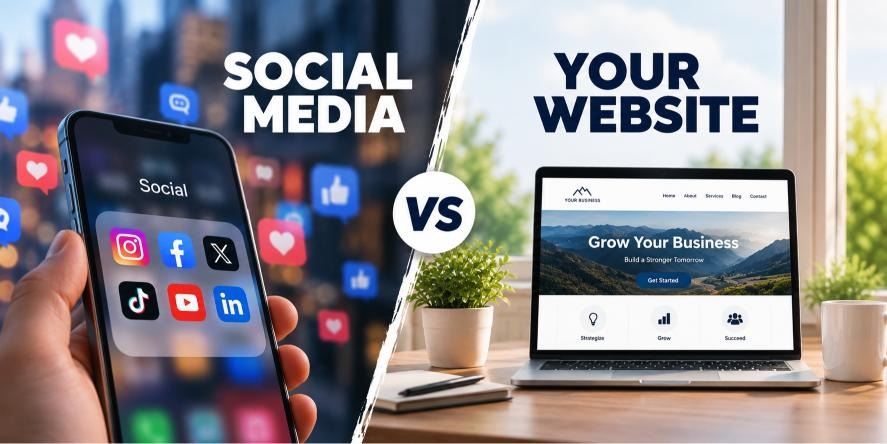
Businesses collectively spend $268 billion annually on social media marketing, yet 100% of that investment sits on platforms they don’t control. When X ended its Revenue Sharing program on September 7, 2026, thousands of businesses lost income overnight—a stark reminder that rented digital space comes with hidden risks. This raises a critical question every business owner must confront: are you building a lasting digital asset, or simply renting space you could lose tomorrow?
The Ownership Question Every Business Must Ask
Before diving into strategy, businesses need to understand a fundamental distinction: what you own versus what you merely access. Your Instagram followers, Facebook page, and TikTok audience exist on infrastructure entirely controlled by someone else, subject to change without your consent or notice.
This isn’t about abandoning social media—it’s about understanding what you’re actually building when you invest time and money into these platforms versus your own digital property.
The Core Difference Explained:
- Websites are digital real estate you fully own and control
- Social media accounts are rented space subject to platform rules
- Algorithm changes can eliminate your reach overnight without warning
- Platform shutdowns or policy shifts can erase years of built audience
Start learning journey with Bigpage

Why Social Media Is Fundamentally A Rental Agreement
Social media platforms operate exactly like landlords—they set the rules, change them whenever profitable, and can terminate your access entirely. Facebook’s organic reach for business pages has declined to just 1.9% of followers, forcing businesses into constant paid advertising to reach audiences they supposedly already built.
X’s September 2026 decision to end Revenue Sharing affected thousands of creators and businesses instantly, with final payouts arriving just days after announcement. This wasn’t unprecedented—platforms regularly shift monetization policies, algorithm priorities, and access rules based on their business needs, not yours.
Signs You’re Renting, Not Owning:
- Your reach depends entirely on algorithm decisions you can’t influence
- Platform policy changes can instantly affect your revenue or visibility
- You cannot export your audience relationships if the platform disappears
- Terms of service can change without requiring your explicit agreement
- Your content exists at the platform’s discretion, not your permanent property

Your Website: The Digital Asset You Actually Own
Unlike social media, your website represents genuine ownership. You control the domain, the hosting, the design, and every piece of data collected through it. No algorithm update can suddenly hide your website from visitors who already know your URL.
E-commerce brand Glossier built their empire initially through Instagram, but strategically shifted toward owned email lists and website traffic as their primary growth engine. This decision protected them when Instagram’s organic reach declined significantly, ensuring their revenue didn’t depend entirely on platform mood swings.
What True Digital Ownership Provides:
- Complete control over user experience and data collection
- No algorithm determining who sees your content or offers
- Permanent digital presence unaffected by platform policy changes
- Direct customer relationships through email lists you fully own

Companies Successfully Balancing Both Strategies
HubSpot built their marketing empire by using social media for discovery while directing all serious engagement toward their owned website and blog. Their strategy treats social platforms as top-of-funnel awareness tools, not the final destination for customer relationships.
Duolingo dominates TikTok with over 15 million followers, yet their actual product, customer accounts, and revenue generation happen entirely on their owned app and website. TikTok serves as their marketing megaphone, not their business foundation.
Athletic apparel brand Gymshark achieved a $1.4 billion valuation by using Instagram and YouTube for brand awareness while building robust email marketing and website optimization as their conversion engine, reducing dependency on any single platform’s algorithm.
What These Successful Companies Share:
- Use social media strategically for discovery, not as their only channel
- Invest heavily in owned website experience and functionality
- Build email lists aggressively as backup communication channels
- Treat platform algorithms as temporary tools, not permanent strategy

The Real Cost Of Platform Dependency
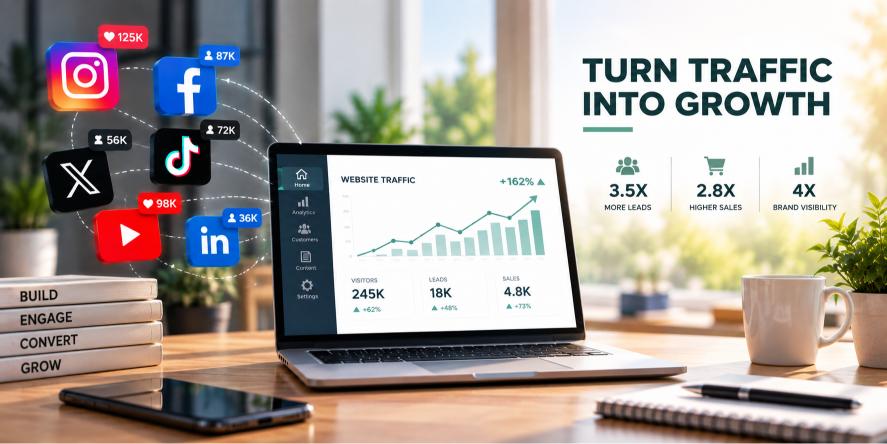
Businesses relying entirely on social media often underestimate the financial risk until a crisis hits. A single algorithm update, policy change, or account suspension can erase years of built audience and revenue within hours, with no appeals process guaranteeing restoration.
E-commerce brands report losing 60-70% of organic reach overnight following major algorithm updates, forcing sudden increases in ad spend just to maintain previous visibility levels. This hidden cost rarely appears in marketing budgets until it’s too late.
Real Risks Businesses Face:
- Sudden account suspensions with little explanation or recourse available
- Algorithm changes reducing organic reach without warning or compensation
- Platform shutdowns eliminating years of audience-building instantly
- Policy shifts changing monetization rules affecting revenue overnight
- Increased advertising costs required to maintain previous organic visibility

Building Your Balanced Digital Strategy
Smart businesses don’t choose between social media and websites—they use each strategically according to their strengths. Social platforms excel at discovery and brand awareness, while websites excel at conversion, retention, and long-term asset building.
The businesses thriving today treat social media as their marketing department’s megaphone while treating their website as their actual business headquarters, where real transactions and relationships develop into lasting revenue.
Steps to Build This Balance:
- Use social media consistently for brand awareness and discovery
- Direct all serious traffic toward your owned website experience
- Build email lists aggressively as your platform-independent asset
- Invest in SEO ensuring long-term organic traffic growth
Follow these essential steps to reduce risk and build genuine digital ownership today.
- Audit how much revenue currently depends on single social platforms
- Invest in professional website development as your digital foundation
- Start building an email list independent of social media algorithms
- Diversify traffic sources instead of relying on one platform entirely
- Implement SEO strategies generating sustainable, long-term organic visibility
- Treat social media as marketing, not your entire business infrastructure
Conclusion
Social media isn’t inherently bad—it’s simply rented space requiring careful strategy rather than blind dependency. Companies like HubSpot, Duolingo, and Gymshark prove that combining strategic social media use with strong website ownership creates sustainable, resilient businesses.
Your website remains yours regardless of algorithm updates, policy changes, or platform shutdowns. Building your business primarily on rented digital land leaves you vulnerable to decisions entirely outside your control.
The smartest businesses aren’t choosing between renting and owning—they’re using rented space wisely while investing seriously in the digital property they’ll always control.
Bigpage can help you to grow your business digitally through well-defined website content, building an NGO Website, Dynamic website for you to enhance your online presence and get more clients through various Facebook, Instagram Ads
