

The Shopping Cart Has Moved To Your Feed
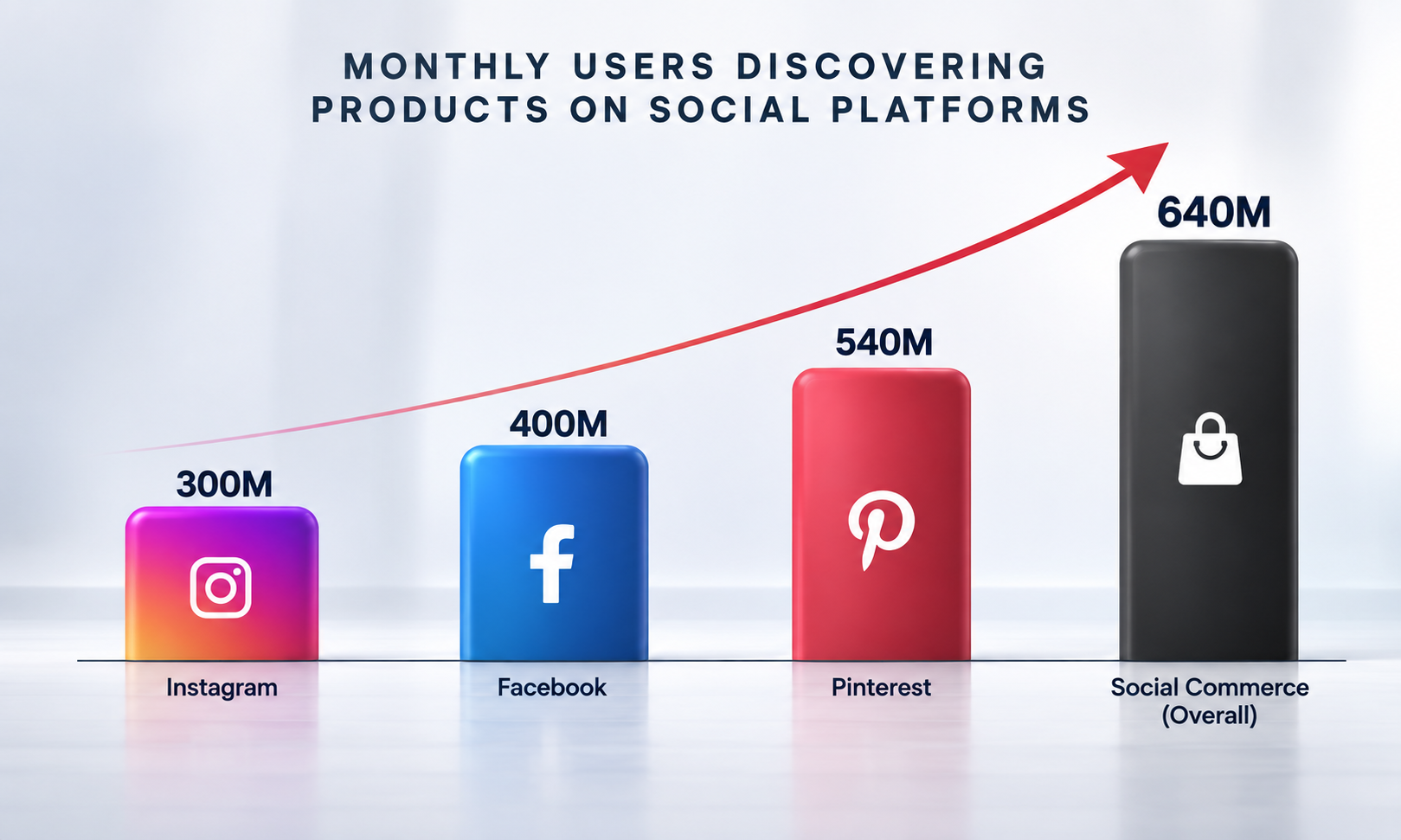
Instagram Shopping and Meesho’s reseller-driven social commerce model have transformed how Indian consumers discover and purchase products, with social commerce in India projected to reach $16-20 billion by 2025, according to industry estimates. This isn’t a niche trend anymore—it’s a fundamental shift in how customers browse, evaluate, and buy, happening entirely within the apps they already scroll daily.
What Social Commerce Actually Means For Your Business
Social commerce eliminates the gap between discovering a product and buying it. Instead of seeing an ad, clicking through to a website, and navigating checkout, customers now complete entire purchases without ever leaving Instagram or WhatsApp Business. This compressed journey fundamentally changes how businesses need to think about their sales funnel.
Traditional e-commerce required multiple steps: awareness, website visit, browsing, cart addition, and checkout. Social commerce collapses this into seconds, capitalizing on impulse and immediate desire rather than deliberate research.
Why This Shift Matters Now:
- Purchase decisions happen faster, often within the same scrolling session
- Product discovery and checkout exist on the same platform simultaneously
- Younger consumers increasingly expect to buy without leaving social apps
- Businesses without social selling capability lose impulse purchase opportunities
Start learning journey with Bigpage

The Numbers Proving This Shift Is Real
Social, influencer, and e-commerce channels now command 85% of working media budgets, according to recent marketing industry data, as brands chase where consumer attention and spending actually happen. This represents a dramatic reallocation away from traditional advertising toward platforms enabling direct purchase.
Meesho, India’s homegrown social commerce platform, has grown to serve over 140 million users, proving that social-first selling resonates deeply with Indian consumers, particularly in tier 2 and tier 3 cities where WhatsApp and Instagram-driven reselling networks thrive.
Key Statistics Driving This Trend:
- 85% of marketing budgets now target social, influencer, and e-commerce channels
- Meesho alone serves over 140 million users through social selling networks
- India’s social commerce market projected to reach $16-20 billion by 2025
- Instagram Shopping increasingly prioritizes in-app purchase completion over external links

Brands Winning The Social Commerce Game
Meesho built its entire business model around social commerce, empowering millions of resellers to sell products directly through WhatsApp and Instagram without needing a traditional website. This approach capitalizes on trust within personal networks, something traditional e-commerce struggles to replicate.
Beauty and fashion brands increasingly use Instagram Live shopping features, where hosts demonstrate products in real-time while viewers purchase instantly through on-screen prompts. This live commerce format combines entertainment with immediate purchasing opportunity, driving strong engagement across Indian audiences.
What Successful Social Commerce Brands Do:
- Tag products directly within organic and paid social content consistently
- Use Instagram Live shopping events to demonstrate products in real-time
- Partner with creators who can showcase products authentically in context
- Optimize WhatsApp Business catalogs for quick, frictionless purchasing

Why Traditional E-Commerce Alone Isn't Enough Anymore
Having a website remains essential, but treating it as your only sales channel means missing where actual purchase decisions increasingly happen. Customers researching products often complete their entire journey on Instagram or through WhatsApp conversations, never generating the website traffic your analytics would show.
This doesn’t mean abandoning your website—it means recognizing that social platforms have evolved from awareness tools into complete sales channels requiring dedicated strategy, content, and checkout optimization specifically designed for in-app behavior.
The Gap Traditional E-commerce Creates:
- Missing impulse purchases that happen during social media scrolling sessions
- Losing customers who won’t complete the extra step of visiting external websites
- Failing to capture live shopping revenue happening on Instagram
- Underutilizing product tagging features that reduce purchase friction significantly

Building Your Social Commerce Strategy
Businesses transitioning successfully into social commerce start by identifying which platforms their specific audience uses for purchase decisions, then building dedicated content and selling strategies for those channels rather than treating social media as purely promotional.
This requires rethinking content creation entirely. Instead of driving traffic elsewhere, successful social commerce content guides viewers directly toward purchase within the same experience, using features like shoppable posts, live selling events, and WhatsApp catalog integration strategically.
Steps to Build Effective Social Commerce Presence:
- Enable shopping features on Instagram and Facebook business accounts
- Create content specifically designed for in-app purchase completion
- Set up a WhatsApp Business catalog for direct, conversational selling
- Test live shopping events for product launches or seasonal promotions

What's Next For Social Commerce In India
Social commerce in India is still evolving rapidly, with platforms continuously adding features that reduce friction between discovery and purchase. Voice-based shopping through regional languages, AI-powered product recommendations within chat apps, and expanded WhatsApp catalog capabilities are expected to accelerate adoption further, especially among first-time internet shoppers in smaller cities.
Brands that establish strong social commerce foundations now will have a significant advantage as these platforms mature, similar to how early Meesho resellers built loyal customer bases before competition intensified.
Emerging Trends to Watch:
- Voice and regional language shopping features expanding across platforms
- AI-driven personalized product recommendations within chat-based selling
- Increased integration between Instagram, WhatsApp, and payment gateways
- Growing preference for vernacular content driving purchase decisions
Start capturing social commerce revenue with these practical steps this month.
- Audit which social platforms your target customers use most for shopping
- Enable native shopping features across your active social media accounts
- Create product-tagged content showcasing items in authentic, real-life use
- Test one live shopping event to gauge audience response and conversion
- Partner with a micro-influencer for authentic product demonstration content
- Track social commerce sales separately from website analytics for clarity

Conclusion
The shift from traditional e-commerce to social commerce isn’t a temporary trend—it reflects fundamental changes in how consumers, particularly younger demographics, prefer to discover and purchase products. Brands like Gymshark prove that meeting customers where they already scroll generates real revenue, not just engagement metrics.
Your website remains important for brand credibility and detailed product information, but limiting sales exclusively to your website means missing where purchase decisions increasingly happen. The businesses thriving in 2026 aren’t choosing between social commerce and traditional e-commerce—they’re building both, capturing customers wherever they’re ready to buy.
Scroll, click, buy isn’t just a consumer behavior shift. It’s your next revenue channel, waiting to be built
Bigpage can help you to grow your business digitally through well-defined website content, building an NGO Website, Dynamic website for you to enhance your online presence and get more clients through various Facebook, Instagram Ads

Agrodut is a managing director and seasoned digital marketing specialist passionate about SEO. With 15 years of experience, he has helped numerous businesses elevate their online presence and achieve higher search engine rankings. A results-driven professional, Agrodut Mondal stays updated with the latest SEO trends and best practices to ensure cutting-edge strategies. When not optimising websites, he enjoys exploring new technology and sharing insights through writing and speaking engagements. Connect with Agrodut for expert guidance on unlocking your website’s full potential in the digital.